
Oxygen Health SystemsBook a consultation

Buyer's Guide 2026

10 mistakes to avoid when buying a hyperbaric chamber

The complete guide for athletes, clinics, wellness professionals, and first-time buyers. Written by the team behind chambers trusted by professional sports organizations.

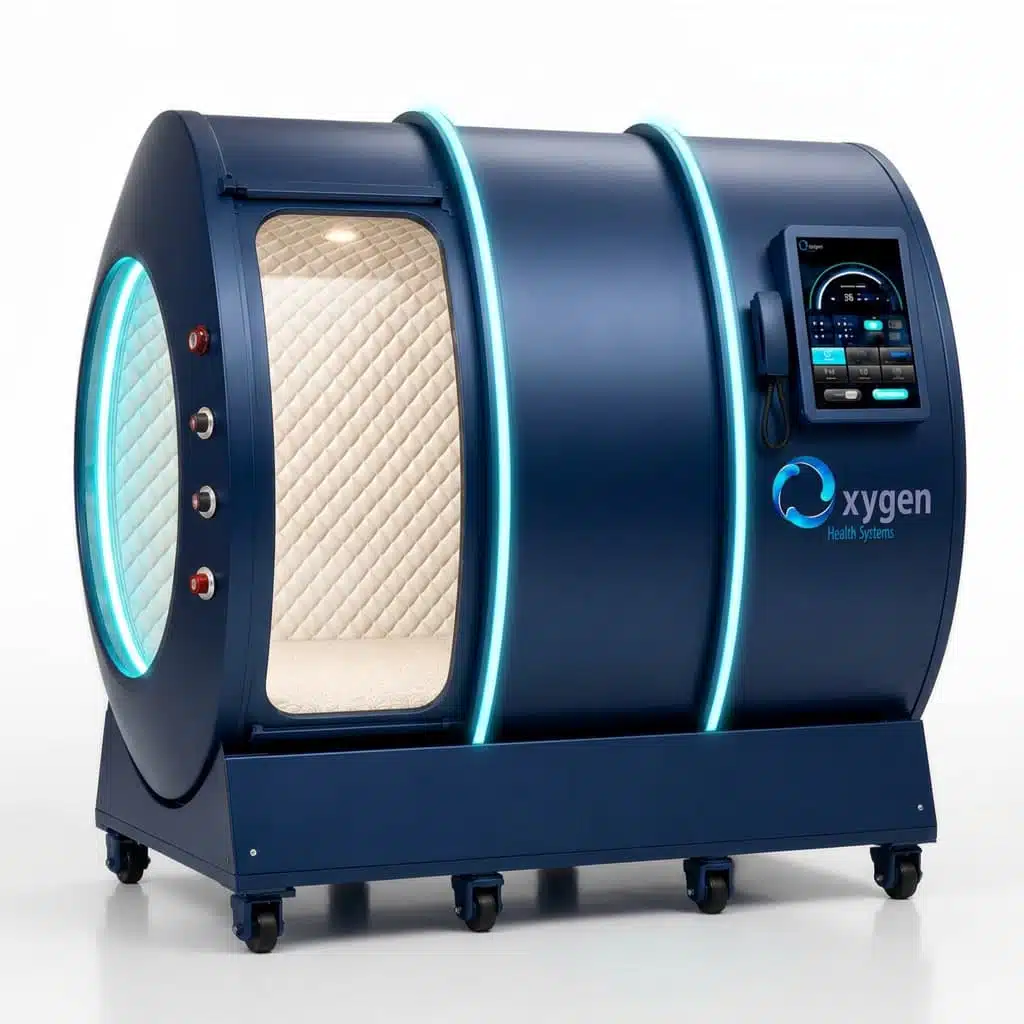
Navy blue Oxygen Health Systems VitalSphere 3P horizontal hard shell chamber with quilted cream interior lining and cyan light rings on a wheeled base

Trusted by

  • NY Yankees
  • NY Giants
  • Pittsburgh Penguins
  • Rudy Gobert
  • US Soccer

Introduction

Why this guide exists

A hyperbaric chamber is not a small purchase. Depending on the model and configuration, you are looking at an investment of anywhere from $15,000 to over $60,000. At that price point, a wrong decision costs months of results you were expecting, a machine that sits unused, and the frustration of starting your research all over again.

The hyperbaric market is crowded and confusing. Pressure ratings are marketed inconsistently. Pricing is rarely transparent. And chambers that look similar on a spec sheet can be enormously different in practice.

This is not a pitch. We will tell you exactly what to look for, what questions to ask, and what the right answers should sound like — regardless of who you end up buying from.

Who this guide is for

  • Athletes and sports teams looking to add recovery technology
  • Clinics, wellness centers, and performance facilities evaluating a chamber for their clients
  • High-performance individuals, executives, and biohackers considering a home chamber
  • First-time buyers who want to understand the market before talking to any vendor
  • Anyone who has already been quoted a price and wants to know what they are actually being sold

Section 1

What HBOT actually is, in plain English

Hyperbaric oxygen therapy means breathing near-pure oxygen inside a sealed, pressurized chamber. The pressure increases how much oxygen your blood and plasma can carry, pushing it into tissues and joints normal circulation does not reach as efficiently. HBOT has over fifty years of clinical use in hospitals — what has changed is that the technology is now accessible for home and facility use.

ATA · Atmospheres AbsoluteThe pressure level inside the chamber — and what each shell type can reach.
Soft shellInflatable · typically caps at 1.5 ATA
Hard shellRigid steel or acrylic · 2.0 ATA and higher
  • 1.0 ATA — sea level
  • 1.3 ATA — wellness benefits typically begin
  • 1.5–2.0 ATA — research-grade effects

Sea level is 1.0 ATA. Wellness benefits typically start around 1.3 ATA. Research-grade effects begin around 1.5 to 2.0 ATA. Soft shell chambers typically cap at 1.5 ATA; hard shell chambers can reach 2.0 ATA or higher.

Oxygen Purity
Normal air is 21% oxygen. An oxygen concentrator delivers roughly 90 to 95% oxygen.
Session Duration
Most protocols run 60 minutes at pressure, while more advanced protocols run 90 to 120 minutes. Benefits compound over repeated sessions — twenty sessions produce measurably different outcomes than two.
Soft Shell vs Hard Shell
Soft shell chambers are inflatable and typically cap at 1.5 ATA. Hard shell chambers are rigid steel or acrylic and can reach 2.0 ATA or higher. It is a capability difference, not just a price difference.

Section 2

Who uses it — our real clients

When professional sports organizations with full medical and performance staff evaluate every option on the market and select a vendor, they have done the due diligence most individual buyers cannot. Their choice is a data point.

These are not hypothetical endorsements or celebrity name-drops. These are real conversations, real purchase orders, and real organizations.

The 10 Mistakes

10 mistakes to avoid when buying a hyperbaric chamber

Each mistake follows the same structure: what it is, what it costs you, and the specific fix. Use it as a checklist when evaluating any vendor or chamber.

  1. Mistake 01

    Choosing Pressure Rating Based on Price Alone

    The cheapest chamber is rarely the right chamber.

    Why soft shell and hard shell chambers are priced differently, what the ATA difference actually means for your results, and the dangerous pattern of buyers spending $15K on a soft shell and realizing 6 months later it cannot deliver what they needed.

    The fix

    Decide your goal first. Map your goal to the minimum ATA required to achieve it. Then select a chamber that meets that specification. Never reverse-engineer your health goals to fit a price point.

  2. Mistake 02

    Ignoring the Difference Between Hard and Soft Shell

    These are fundamentally different products. Most buyers treat them as the same category with different price tags.

    Construction, durability, pressure ceiling, and use-case differences between inflatable soft shell chambers and rigid hard shell chambers. Why a hard shell chamber appropriate for a professional sports team is the wrong choice for a solo wellness user, and vice versa.

    The fix

    Match the shell type to how the chamber will be used, who will use it, and how often. A professional sports facility needs hard shell. A home user doing daily wellness recovery may be perfectly served by soft shell. The choice is not about status. It is about fit.

  3. Mistake 03

    Believing Claims of "Years of Experience"

    Some companies claim decades in the industry when they only recently entered the market.

    How new hyperbaric sellers borrow credibility by quoting the age of the technology, a parent company, a manufacturer they resell for, or the combined years of their staff, and present it as their own track record. A website that looks established and a confident sales pitch can hide a company that has only been selling chambers for a year or two, with no installed base, no service history, and no proof it will still be around when your chamber needs support.

    The fix

    Verify the company, not the story. Look up the business registration date and how long the domain has existed. Ask how many chambers they have installed and for how long, and ask for references from clients who have owned one of their chambers for several years. If they cannot show a real history under their own name, treat the "years of experience" as marketing.

  4. Mistake 04

    Buying a Luxury Chamber Online Without Testing Its Systems

    A beautiful finish tells you nothing about what keeps you safe and comfortable at pressure.

    Many buyers purchase high-end chambers online based on photos, upholstery, and screens — without ever testing the systems that actually matter: the quality of the breathing system, the pressure control system, and the depressurization system. They never hear the noise level during operation or while depressurizing, never confirm whether the chamber can run programmed protocols, and never verify the redundancies built into each critical system.

    The fix

    Test before you buy, in person or through a live demonstration. Run a full session cycle and evaluate the breathing system, how smoothly pressure is controlled and held, and how gradually the chamber depressurizes. Listen to the noise level during operation and depressurization. Confirm the chamber supports programmed protocols, and ask the vendor to show you — not just tell you — the backup redundancies in each system.

  5. Mistake 05

    Not Considering the Advanced Features and How They Benefit You

    Two chambers can look alike on paper and feel completely different in use.

    Buyers often compare chambers on price and pressure alone and overlook the features that shape every session. Single-touch pressure selection lets you choose your target pressure with one tap instead of manually adjusting valves, so sessions start consistently and safely every time. Built-in air conditioning keeps the chamber comfortable as it pressurizes and warms, which makes longer and more advanced protocols far easier to complete. A true lightweight BIBS (built-in breathing system) delivers oxygen through a comfortable, low-resistance mask, so you breathe naturally instead of fighting a heavy or poorly fitted setup. Ultra-quiet auto depressurization brings you back to surface pressure smoothly and automatically, without the loud hissing or manual valve work that can make the end of a session stressful and uncomfortable on the ears.

    The fix

    List the features that matter for how you will actually use the chamber, then ask the vendor to demonstrate each one. Try the pressure selection yourself, feel the cabin temperature during a full session, and wear the BIBS mask long enough to judge comfort, and listen to a full auto depressurization cycle from inside the chamber. Ask how each feature benefits your specific goals, not just whether it is included.

  6. Mistake 06

    Not Asking About Oxygen Purity and the Concentrator

    The chamber is only half the system. What you breathe inside it matters just as much.

    How oxygen concentrators work, what purity percentages mean in practice (90% vs 95% is not trivial over thousands of hours of use), bundled vs separately sold concentrators, lifespan and replacement cost, and why some budget chambers ship without a compatible concentrator specification. A red flag: there is no such thing as a 98% oxygen concentrator. Concentrators top out at roughly 95%. If a seller claims 98% oxygen, assume they are probably misrepresenting other specifications too.

    The fix

    Ask specifically: what concentrator is compatible with this chamber, what is the oxygen purity output, is it included in the quoted price, and what is the expected service life and replacement cost? These are not optional questions. If anyone quotes you 98% purity, treat every other claim they make with suspicion.

  7. Mistake 07

    Underestimating Installation, Space, and Setup

    Many buyers realize their space does not work after the chamber has already been delivered.

    Realistic space requirements for soft and hard shell chambers including the concentrator footprint, ceiling height, electrical requirements (standard outlet vs dedicated circuit), ventilation for oxygen-enriched environments, and door and hallway dimensions for hard shell delivery.

    The fix

    Before finalizing any purchase, measure your intended space including ceiling height and access routes. Confirm electrical requirements with your vendor. A good vendor will walk you through this during the sales process rather than leaving it as your problem after delivery.

  8. Mistake 08

    Choosing a Vendor With No After-Sale Support

    The chamber works perfectly on day one. It is day 400 that tells you who you bought from.

    What after-sale support actually looks like in the hyperbaric industry: dedicated service technicians vs a ticketing portal, warranty terms (what is covered, what is excluded, labor vs parts), and what happens when a chamber needs servicing after its vendor has pivoted or closed. Warranty terms on paper say nothing about whether the company can actually honor them. A five-year warranty from a company with no technicians, no parts inventory, or no track record is just a promise.

    The fix

    Treat after-sale support as a specification, not a bonus. Ask: who do I call when something is wrong, what is the average response time, do you have technicians or route service through the manufacturer, and what is the exact warranty coverage in writing? Then check whether they can deliver it: how long they have been in business, where parts are stocked, how many service technicians they employ, and references from customers who have actually filed a warranty claim.

  9. Mistake 09

    Buying Without Matching the Chamber to Your Goal

    There is no single best hyperbaric chamber. There is the right chamber for your specific purpose.

    Goal-to-chamber mapping across athletic recovery and performance, longevity protocols, clinical and wound healing applications, cognitive performance and executive wellness, and general home wellness. A decision framework for matching ATA, shell type, size, and budget to your stated goal.

    The fix

    Write down your specific goal and intended use frequency before speaking to any vendor. A qualified vendor should ask you these questions and use your answers to guide their recommendation. If a vendor recommends the same chamber to every buyer, they are selling, not consulting.

  10. Mistake 10

    Ignoring Consistency — The Mistake That Wastes Everything

    A chamber you do not use regularly is the most expensive wellness investment with the worst ROI.

    The evidence that HBOT benefits compound over 20, 40, and 60 sessions. Why using a chamber twice a month for three months looks like a failed experiment. The comfort and convenience factors that determine whether a chamber gets used daily or sits unused, and the real math comparing clinic visits to home ownership at 3 to 5 sessions per week.

    The fix

    Before purchasing, picture the specific time of day and location where you will use this chamber consistently. If you cannot picture it clearly, plan for it before you commit. A good vendor will help you build a usage plan, not just close a sale.

Section 3

How to compare chambers side by side

Use this checklist when evaluating any chamber from any vendor. Bring it to every conversation. Ask for every answer in writing.

Questions to ask every hyperbaric chamber vendor
Continuous Operating PressureWhat ATA is maintained throughout a full 60-minute session? Get this in writing.
Shell Type and ConstructionHard shell or soft shell? What is it made of? What is the warranty on construction materials?
Hands-On System TestingCan you test the breathing, pressure control, and depressurization systems, hear the noise level, run programmed protocols, and verify redundancies before buying?
Oxygen Concentrator IncludedIs it included in the price? What is the purity output? What is the service life?
All-In PricingWhat does the total cost include? Delivery, setup, first-year maintenance, and out-of-warranty repair rates?
Warranty TermsWhat exactly is covered? Parts only? Labor included? For how long? Can the company actually fulfill it, with stocked parts, in-house technicians, and customer references for past claims?
After-Sale SupportWho do you call? What is the response time? Is there a dedicated technician?
Return and Trial PolicyWhat are the exact terms? What fees apply? How long is the window?
Financing OptionsWhat are the available financing terms and the total cost of financing?
Space and InstallationWhat are the exact footprint and electrical requirements?
Client ReferencesCan they provide references from buyers in similar use cases to yours?

A vendor who cannot answer every one of these questions clearly and in writing is giving you an answer.

Section 4

Why Oxygen Health Systems

You now have the framework to evaluate any vendor in this market. Here is how we measure up against it.

Pressure Specification
We publish continuous operating pressure, not peak rated pressure. Our specs reflect what your body actually experiences during a session.
Oxygen Concentrator
Included in every package. We specify the concentrator compatible with each chamber and include it in your pricing conversation from the first call.
Transparent All-In Pricing
We build delivery, setup, and first-year support into your quote. No hidden line items appearing after you commit.
After-Sale Support
Real technicians with names. Dedicated support contacts for every account. Not a ticketing system.
Goal-Matched Consultation
We ask your goals first. We recommend the chamber that fits those goals. If we are not the right fit for what you need, we will tell you.
Financing Available
Flexible financing options discussed on your first call, not buried in fine print.
We have been in rooms with professional sports medical directors, university athletic programs, and elite wellness facilities evaluating every chamber brand on the market. They chose us. That did not happen by accident.

Section 5

Your next step

You know what mistakes to avoid, what questions to ask, and what good answers sound like. The next step is a direct conversation with our team. It is not a sales call — it is a consultation. If we do not think we are the right fit, we will tell you that too.

No pressure. No scripts. Just the information you need to make a confident decision.

What happens on your consultation call

  1. 1.We ask about your specific goal — recovery, longevity, performance, or clinical use
  2. 2.We assess your space and installation requirements with you
  3. 3.We walk through the chambers that fit your use case
  4. 4.We give you transparent all-in pricing including the concentrator, delivery, and setup
  5. 5.We answer every question from the comparison checklist without hesitation
  6. 6.We discuss financing if relevant